


Mobile application allowing for the management of the innovative ZipChargeGo charger
ZipCharge is a UK company behind ZipChargeGo, a portable energy storage unit and EV charger roughly the size of a suitcase. It targets drivers without access to fixed home charging, letting them charge without a wallbox or a dedicated parking space.
A device operated remotely is only as good as the app that controls it. ZipCharge needed software to manage the charging process, locate the unit and present its status and history, ready in time for the product’s first public showing. The hardware was still being prototyped, so the application had to be built alongside a device that did not yet exist in final form.

In a nutshell
A mobile application with a backend server for managing ZipChargeGo, a portable energy storage unit and EV charging station in one. The MVP lets owners control the charging process, locate the device on a map and review its status and charging history, with the app talking to the device through the backend over OCPP.
Challenges
ZipCharge came to us with an unusual proposition. ZipChargeGo, described by its makers as a power bank on wheels, is a compact portable charger the size of a suitcase that lets drivers charge without fixed infrastructure. Our task was the software that puts the owner in control of it.
We worked in two-week iterations, each closing with a progress walkthrough with the client. The opening phase defined the MVP scope and the application architecture. UX research followed, then workshops with the client, and from the material gathered we produced the information architecture and proposed user flows as clickable wireframes. Once the mockups were accepted, mobile development began, with backend implementation running alongside it and detailed UI design feeding in as it was completed.
Our approach
The breakthrough came from a question about who the product is actually for. The initial assumption was straightforward: EV drivers. Workshops and moodboard sessions with the client pointed somewhere else – the device is more likely to be perceived as a smart home gadget than as a piece of charging equipment. That shift changed what the application needed to be and how it was designed, and it happened early enough to shape the product rather than force a rewrite.
Because the app is only as good as its link to the hardware, integration was the technical centre of the project. We designed it to be resilient to change on the device side, which turned out to be exactly what the situation demanded.
Delivering software ahead of the hardware
The application was built while the first two device prototypes were still being constructed. The first working prototype was integrated with the app two months after development finished, which meant the software had to be flexible at the moment of meeting real hardware and adapt quickly ahead of the first public showing. Planning for that gap, instead of assuming a finished device, is what allowed the launch to hold its date.
Outcomes
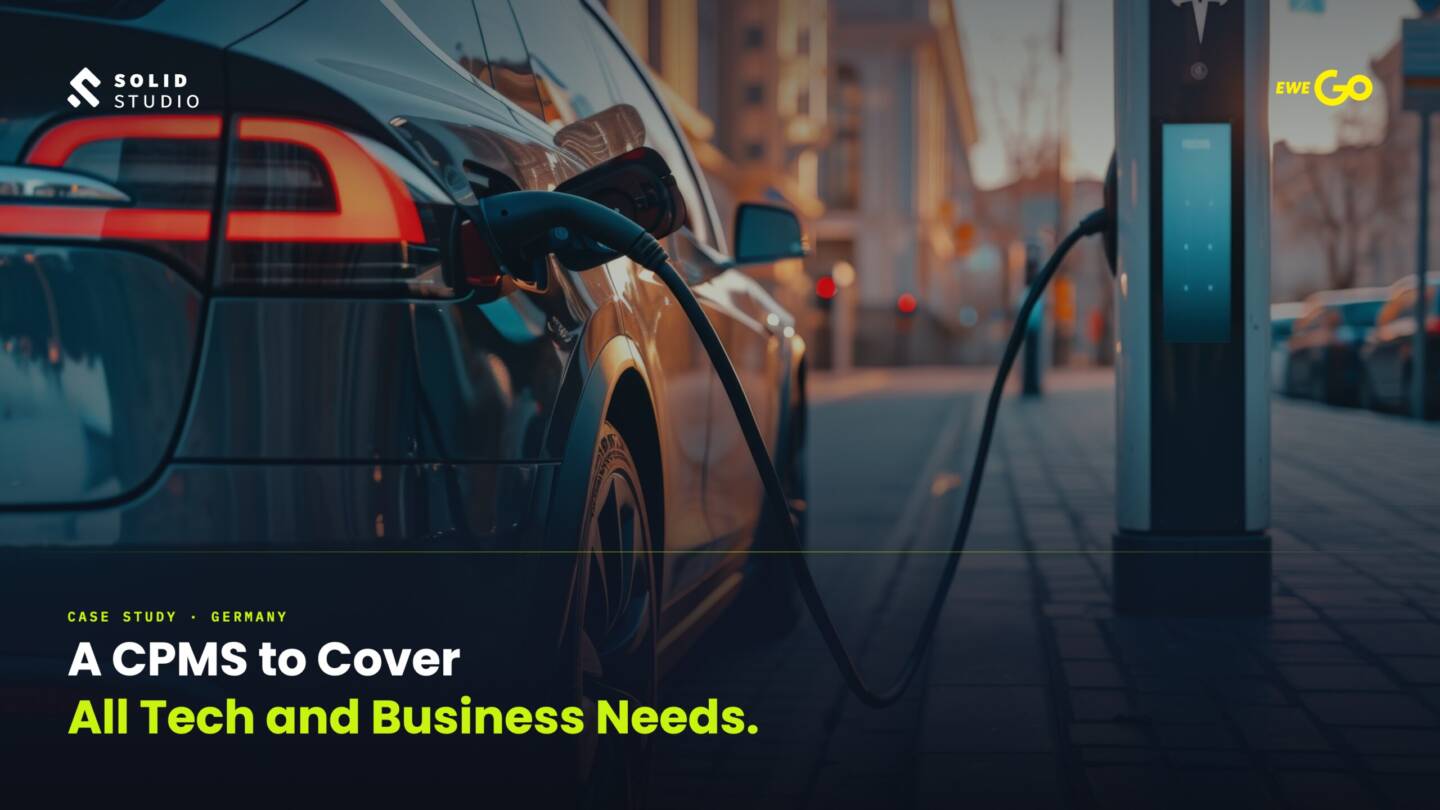
EWE Go, one of Germany’s leading e-mobility operators, partnered with Solidstudio to upgrade their infrastructure with a flexible, high-performing Charge Point Management System tailored for rapid public network expansion and future fleet management. Solidstudio delivered the core CPMS platform along with custom feature extensions, charge point migration and now holds ongoing support via SLA

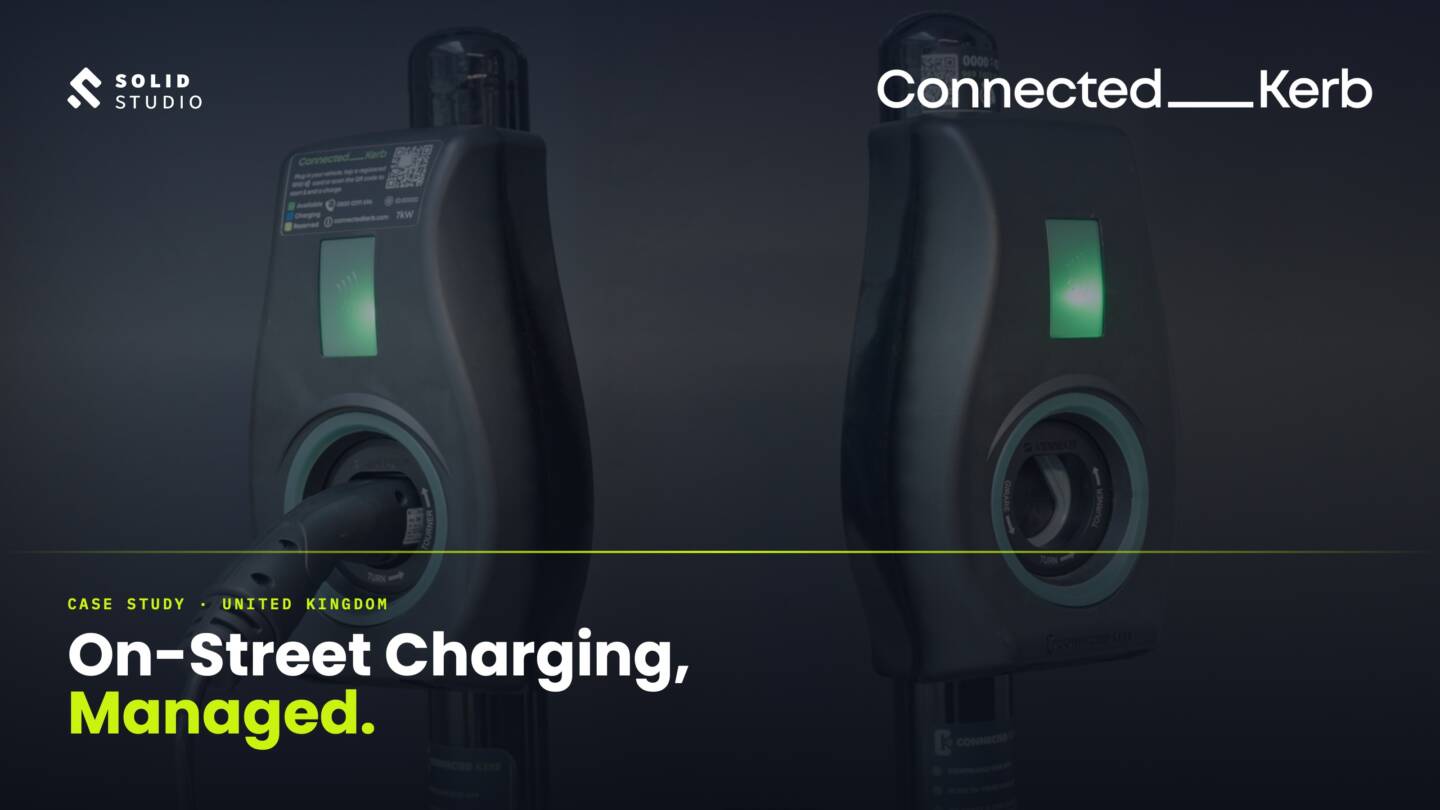
An advanced migration to our CPMS system backed by custom development and ongoing maintenance. Migration involved 9000 charging points. A particularly complex aspect was ensuring the integration of the current EMP system, including mobile app users and the OCPI partners already connected.

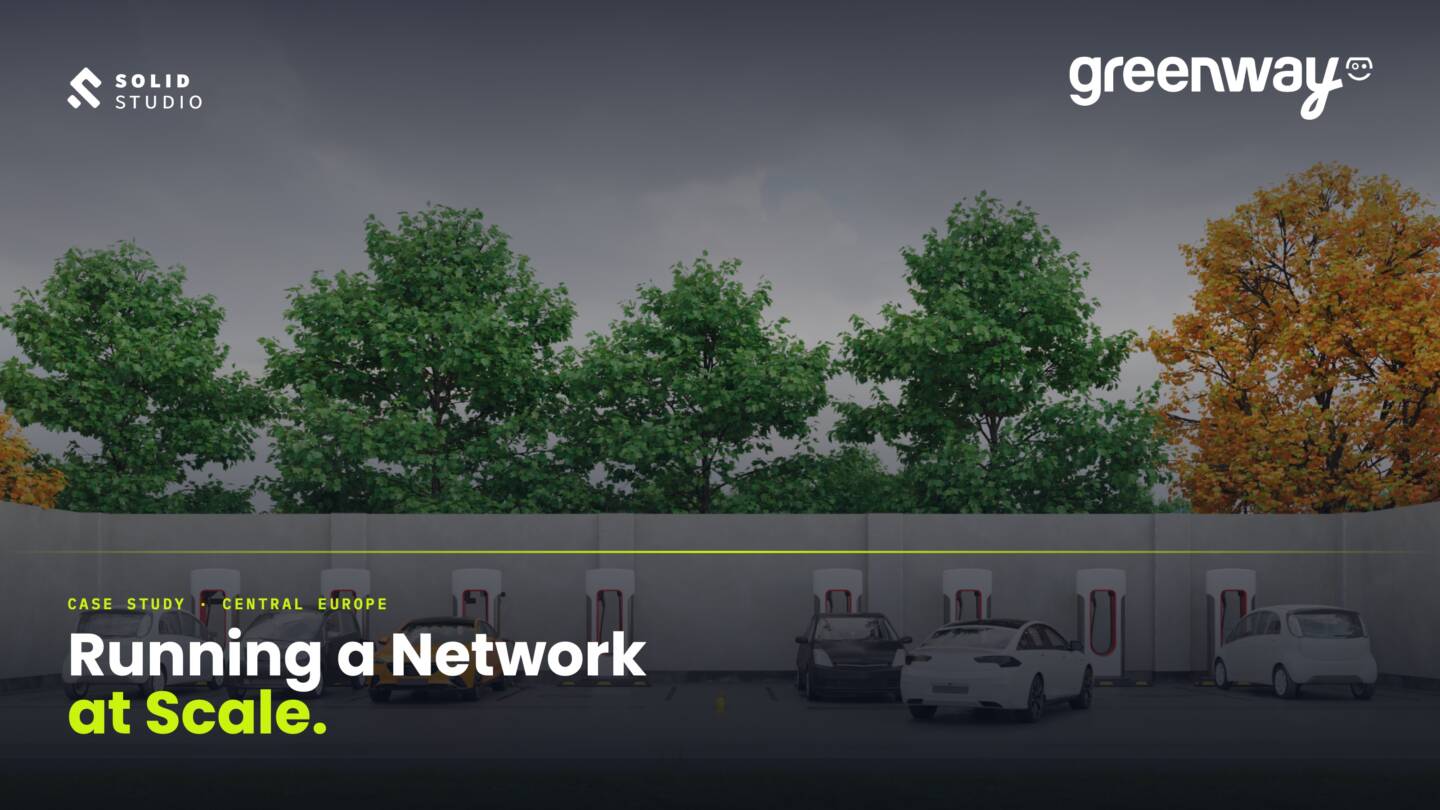
Comprehensive custom CPMS system and effective migration, seamlessly integrating with GreenWay’s existing digital ecosystem to future-proof their high-volume EV charging network across the CEE region.