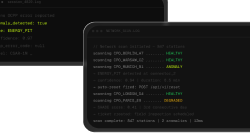
The OCPP Virtual Charge Point (VCP) is a lightweight, open-source simulator that behaves like a real charging station, straight from your terminal. Build, test, and break your Central System before a single EVSE ships.
Speed up your CPMS development. The open-source Virtual Charge Point is a lightweight Node.js simulator for OCPP communication flows.
Test edge cases and debug payloads straight from the terminal. When you need to see how your Central System handles stress, VCP puts you in control.
No physical hardware required. A charging station on your laptop, running against your Central System in minutes.
Skip the hardware wait. VCP puts a charging station on your laptop, so you code against OCPP from day one.
Break things on purpose. VCP lets you throw bad input and rough conditions at the Central System, then confirm it holds up.
Test before the field does. VCP mirrors how a real station talks to your back office, so integration problems surface in staging.
Clone the repo, install, point VCP at your WebSocket endpoint. Real OCPP traffic against your Central System - no station, no lab, no procurement.
VCP is open source under Apache-2.0. Solidstudio maintains it in the open, working toward a more interoperable e-mobility stack - open a pull request or file an issue via the standard fork-and-pull flow.
Yes. Switch between the two protocols by running the respective script – index_16.ts for 1.6, index_201.ts for 2.0.1.
Yes. Basic messages (BootNotification, Heartbeat) are automated, and an admin WebSocket endpoint lets you send actions like Authorize or StartTransaction on demand.
Absolutely. VCP is 100% open source under Apache-2.0 – use, modify, and integrate it into open-source and commercial testing environments at no cost.
Clone the repo, point it at your Central System, and you have a charging station running locally.