


OCPI - OICP Adapter that allows a seamless connection to the Hubject’s platform
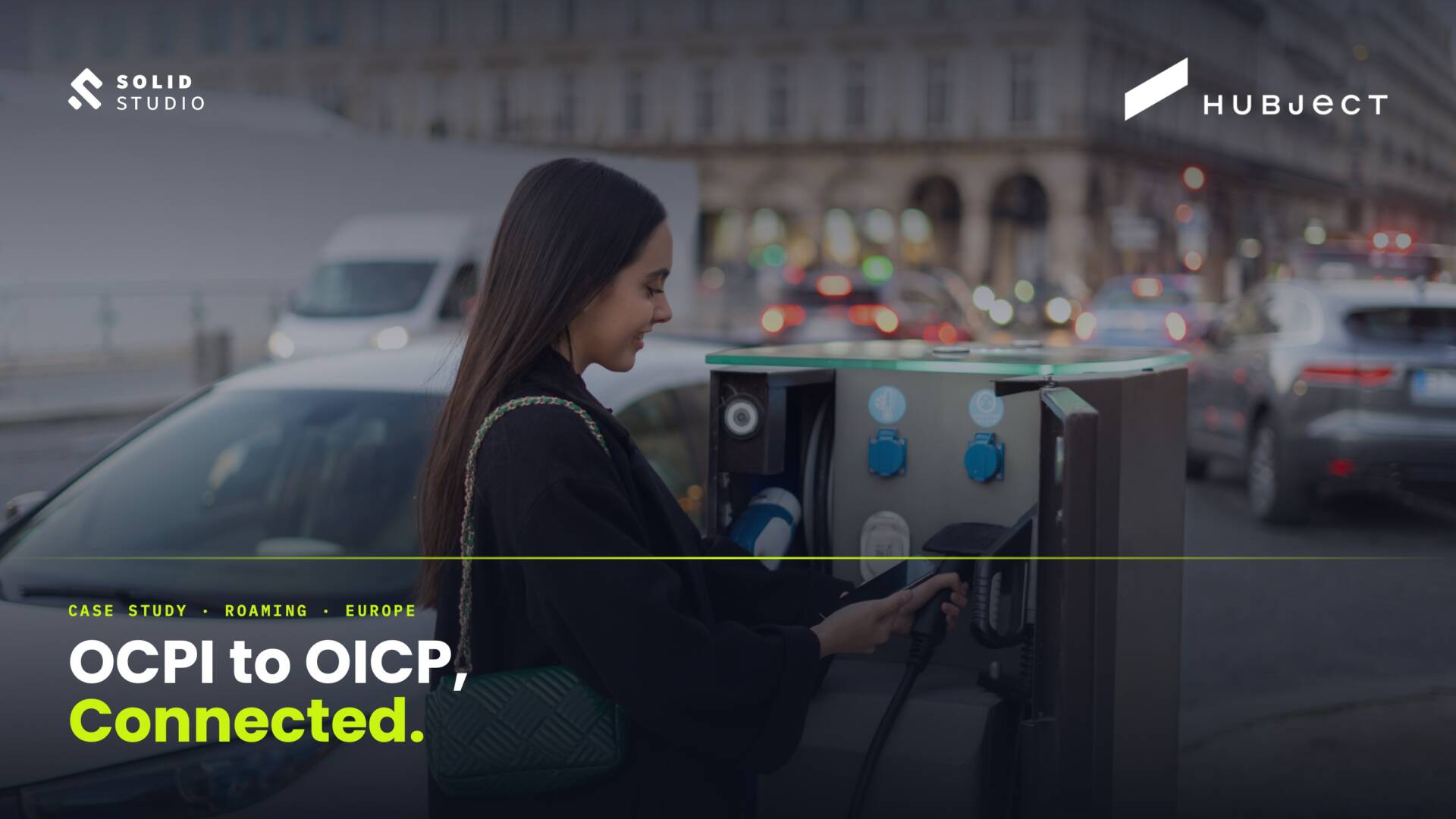
Hubject operates one of the largest eRoaming networks in the eMobility market, connecting charge point operators and mobility service providers across borders through the OICP protocol. For drivers, that network is what makes a single contract work at thousands of stations run by different companies.
The growth of that ecosystem depends on how easily operators can join it. Many charge point operators had already standardised on OCPI, and asking them to implement and certify a second protocol was a real barrier to entry. Hubject needed a way for those operators to connect without rebuilding the integration layer they already ran in production.

In a nutshell
An adapter that lets any charge point operator already speaking OCPI connect to Hubject’s OICP-based roaming platform without rebuilding their own stack. Alongside the software, we handled the technical side of Hubject onboarding, guided the certification procedure and set up the data flows the platform expects.
Challenges
Hubject was looking for a software company willing to take on a genuinely difficult task: connecting two structurally different protocols, OCPI and OICP. The two standards describe the same charging reality in very different ways, so bridging them is far more than field-to-field mapping. With a long track record in open standards, we joined the project.
The work split naturally into two stages. The first delivered an MVP built by two backend developers and a project manager: a proof of concept for the OCPI-OICP translation layer, flows for sharing location data, sessions and CDRs, and remote control of charge points. The second stage took that MVP to production, completing the translation layer and adding multitenancy support and extensibility mechanisms so the adapter could serve many operators at once and absorb future protocol revisions.
Our approach
With two open protocols meeting in one product, both sides of the equation mattered: the technical correctness of the translation and the day-to-day convenience of the operators using it. We focused on delivering a fully OCPI-compliant API, so that from the operator’s perspective nothing unusual is happening – they keep speaking the protocol they already implement.
Every piece of protocol complexity was deliberately pushed inside the adapter. That single design decision is what makes each new integration cheap: the intricate part is solved once, in one place, instead of being repeated in every connection. Even at this level of technical depth we kept the qualities that make a product viable in production – room for custom requirements, security, and the ability to scale.
One API instead of two protocol stacks
The value of the adapter is measured in what operators no longer have to do. Instead of maintaining a second protocol implementation with its own release cycle, edge cases and certification burden, they keep their existing OCPI integration and gain access to the Hubject ecosystem through it. Multitenancy means one deployment can serve multiple operators, and the extensibility mechanisms leave room for future versions of both standards.
Outcomes
Related product
The experience from this project feeds directly into our productised gateway, used by operators who need OCPI connectivity without building it in-house.

EWE Go, one of Germany’s leading e-mobility operators, partnered with Solidstudio to upgrade their infrastructure with a flexible, high-performing Charge Point Management System tailored for rapid public network expansion and future fleet management. Solidstudio delivered the core CPMS platform along with custom feature extensions, charge point migration and now holds ongoing support via SLA

An advanced migration to our CPMS system backed by custom development and ongoing maintenance. Migration involved 9000 charging points. A particularly complex aspect was ensuring the integration of the current EMP system, including mobile app users and the OCPI partners already connected.


Comprehensive custom CPMS system and effective migration, seamlessly integrating with GreenWay’s existing digital ecosystem to future-proof their high-volume EV charging network across the CEE region.