

What New Mobility Congress 2026 told us about the next phase of charging in Central Europe
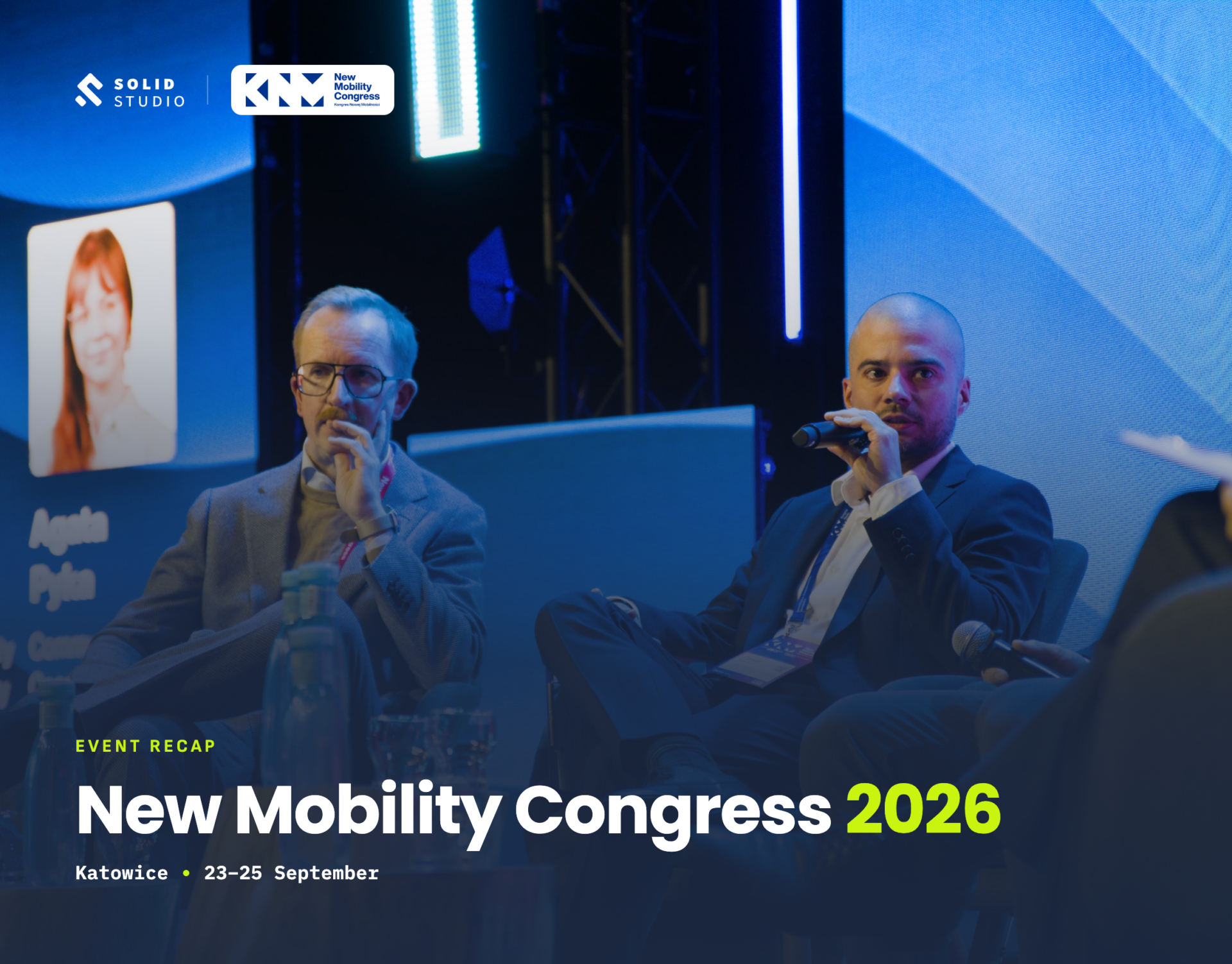
New Mobility Congress is over, and it left us with a clearer picture of where this market is heading in the region and how far it has already come.
We were there as a Knowledge Partner, with a stand in the EXPO hall and our CEO on the Power Stage. Here is what we took away.
The questions have changed
The clearest signal was not on any stage. It was at the stand.
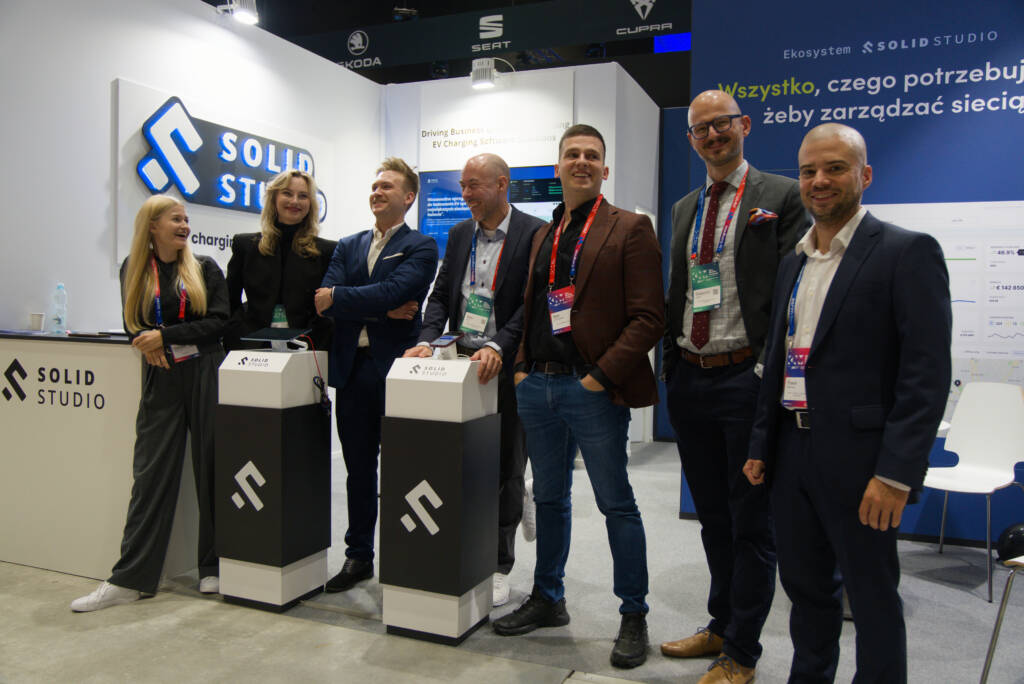
A few years back, a good share of conversations we had in Poland started with the basics: what roaming actually does, why interoperability matters, whether a management platform is worth the cost. This year almost nobody needed that. The questions were operational and specific.
How much is it costing us not to be visible in the navigation systems drivers actually use? Why does utilisation sit flat while the estate keeps growing? What happens to our data when we change platforms? Which parts of our operation should we automate first?
That shift matters more than it sounds. A market asking those questions is a market that has moved past the pilot stage and started running charging as a business. Central Europe is catching up faster than most people outside the region assume.
Consolidation: the panel
The session our CEO joined was titled “One Market, Many Roles: CPOs, eMSPs and Roaming Hubs in the Charging Ecosystem”, and it circled repeatedly around one question: what happens as this sector consolidates?

There is no serious argument that consolidation is not coming. Portfolios are merging, smaller operators are being absorbed, and the economics favour scale in almost every part of the stack. The interesting question is not whether, but what it produces.
Consolidation can be genuinely good for this industry
Scale fixes several things at once. It spreads the fixed cost of software, support and compliance across more charge points. It gives operators the volume to negotiate better energy contracts. And for drivers, it means fewer apps, fewer accounts and fewer moments of standing in front of a charger wondering which card to reach for.
Fragmentation has been one of the real brakes on adoption in this region. Consolidation, done well, removes some of it.
But only on top of foundations that already work
Here is the part that came through most strongly in the discussion, and it is worth stating plainly.
Consolidation does not fix a broken operation. It multiplies it.
When an operator acquires a network, they inherit everything: the hardware they did not specify, the firmware nobody documented, the integrations someone built in a hurry three years ago, the maintenance backlog. If the acquiring operation is already running on manual processes and partial visibility, adding a second network does not create efficiency. It creates a bigger version of the same problem, now spread across two estates that were never designed to work together.
Three foundations came up repeatedly as the things that have to be in place first.
Roaming that actually functions. Not roaming as a line in a contract, but roaming where sessions start reliably, pricing is transmitted correctly, and failed transactions do not need manual reconciliation at the end of every month. Merging two networks with unreliable roaming produces one larger network with unreliable roaming.
Operations supported by automation. There is a scale at which a person checking dashboards and chasing faults stops being viable. Most operators discover that threshold by crossing it. Remote diagnostics, automated fault detection and clear operational data are what make a doubled estate manageable rather than merely larger.
Technology you can trust under load. The moment an estate doubles is the worst possible moment to discover the limits of a platform. Consolidation compresses years of growth into a single quarter, and systems that were adequate at the previous size are not automatically adequate at the new one.
Get these right, and consolidation delivers what it promises. Skip them, and it becomes an exercise in gathering problems into one place.
The role question underneath it all
The panel title pointed at something else worth noting: the lines between CPO, eMSP and roaming hub are not as fixed as the labels suggest.
Operators are launching their own driver-facing services. Mobility providers are taking positions in physical infrastructure. Roaming hubs are moving further into data and settlement. Each of those moves makes sense individually, and together they make the ecosystem harder to describe in neat categories.
What does not change is the dependency. No role in this market works alone. A charge point that is not reachable through roaming, not visible in the navigation a driver is already using, and not connected to a payment method they already hold, is a charge point that will underperform regardless of how good the hardware is.
That was the thread running through the whole session, and it is the thread we keep coming back to in our own work.