We build and run the platform behind GreenWay, one of the biggest public charging networks in CEE, and we have spent years building for operators in Western Europe's more mature markets. Now we work with operators across this region: CPO, eMSP, roaming and network intelligence, taken one layer at a time or all at once.
Bart Andrzejewski
eMobility Consultant, Central and Eastern Europe
HOW THE REVIEW RUNS
BEFOREA short call to scope what you run: your backend, your hardware mix, your roaming partners
THE REVIEWWe go through the network with you: your platform and integrations, your AFIR exposure, your cross-border position, and what your operational data does not tell you
AFTERA written assessment, in your hands: what we found, what we would fix first, what we would leave alone
No charge, no deck, no demo. The assessment is yours to keep either way.
Charging networks we work with across Europe.
THIS DOES NOT STOP AT YOUR BORDER
Your drivers cross borders. Your reporting, roaming and data have to keep up.
A driver going from Warsaw to Dubrovnik crosses four or five countries and as many roaming arrangements. AFIR compounds it: each market reports separately, on its own schedule, into its own national access point, and nobody ends up holding the regional picture. If you operate anywhere near a border, you are already living with this, and it gets harder with every site you add.
This is the part of the job that has no local answer. Your hardware vendor does not have one, and neither does a platform built for a single market.
Roaming is how you earn from traffic you did not generateDirect OCPI links to any partner, Hubject and Gireve when you want the reach of a hub, and you choose which stations are exposed and to whom.
AFIR is filed per market and read as one pictureEach national access point gets what it asks for, in the format it asks for, while you keep a single view of the region.
Tariffs do not stop at the border eitherMulti-currency pricing per socket and per roaming connection, scheduled ahead rather than changed by hand.
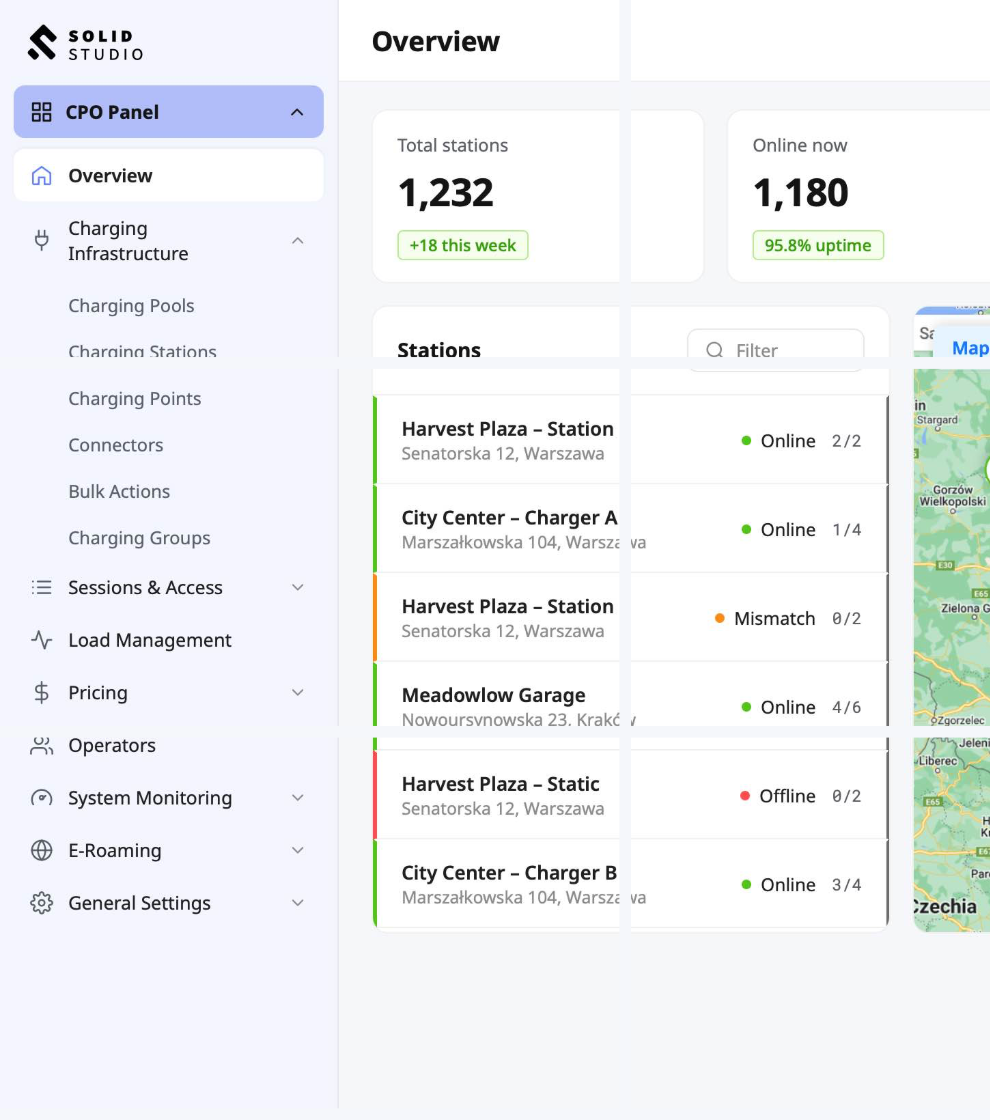
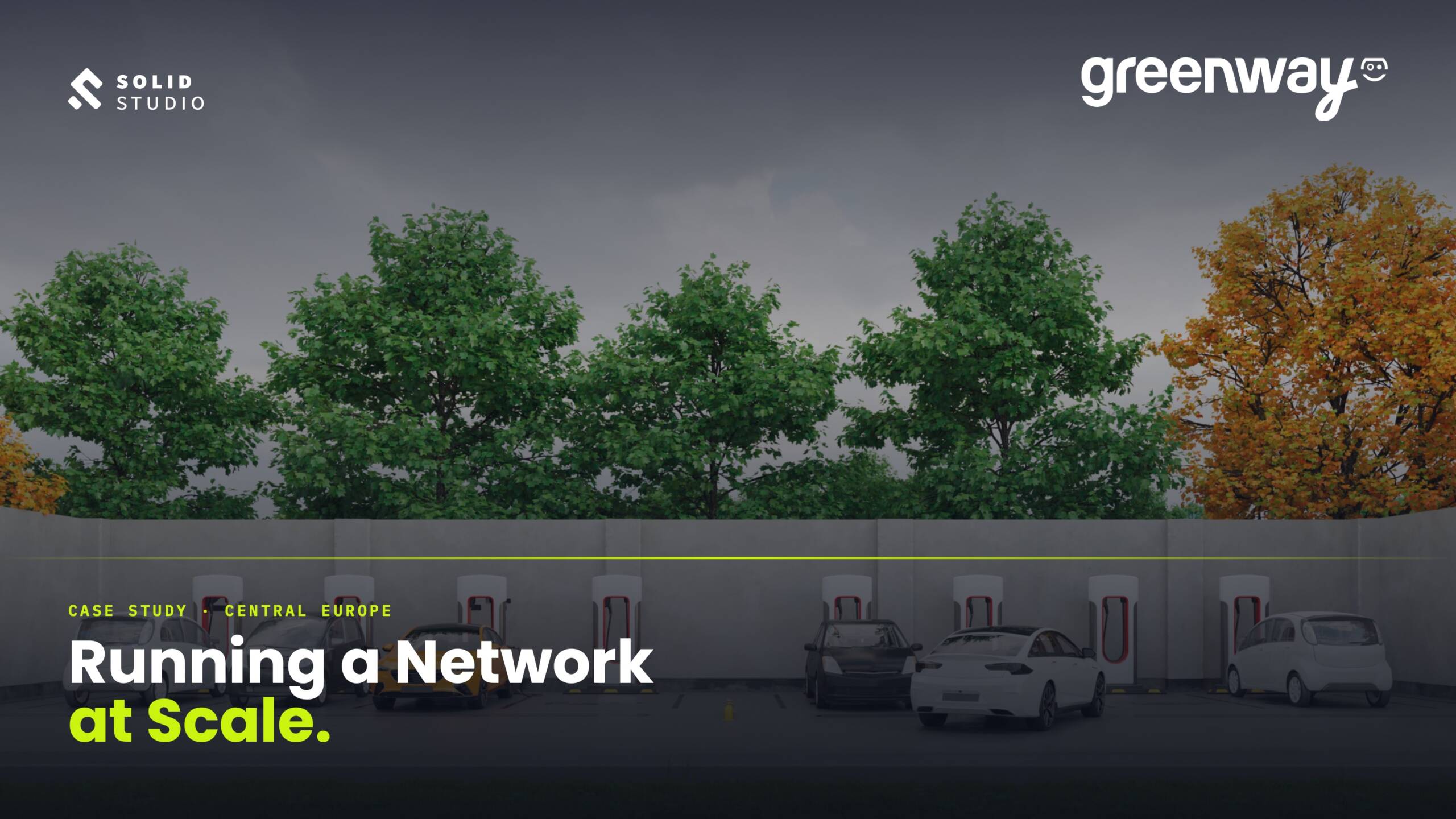
GreenWay, one of the biggest public charging networks in CEE, runs on this platform: 6,500+ managed EVSEs, 150,000+ sessions a month, 45+ hardware vendors, 5 countries. Migrated onto it without a shutdown.
Wherever you start from, the first step is different
The review starts by working out which of these you are, and what that makes the sensible first move.
You built it yourself
Your team built the backend and it handles charging well. What it was never built for is regulatory reporting, roaming and settlement, and those arrive later and keep growing. The first step here is usually a layer on top rather than a replacement: the OCPP Proxy and the intelligence layer sit alongside what you have.
You run on someone else's platform
It works until the region asks something of it: access to your own operational data, tariffs across several markets, reporting into a national access point. The intelligence layer reads the platform you run today, whoever built it, so you can see the gap before deciding anything about it.
You run the whole operation yourself
You want the roadmap and the integrations to follow your decisions rather than someone else's release notes. That is the full conversation: CPO, eMSP, roaming and payments, with a migration planned around your dates and your sign-offs.
NOTHING HAS TO MOVE
See what the network is losing before you change anything
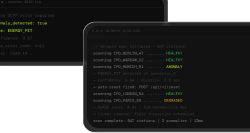
EV Network Intelligence layers on top of the platform you already run, ours or anyone else's, with no migration first. It reads OCPP history, sessions and CDRs and reports on what uptime does not show: hours connected with no kilowatt delivered, and stations quietly underperforming the one beside them.
EV Network Intelligence
No migration first
If that is all you ever take from us, it still pays for itself in stations you stop losing money on.
The proxy is how a network moves. Stations connect to it once while traffic keeps flowing to the backend you run today, so old and new share one connection and the rollback is the same routing change that made the move.
01
Look at what you run now
We map your current backend, your hardware mix, your OCPI partners and everyone who has to sign off.
02
Read it before you move it
The intelligence layer goes on top of your platform and names the stations that quietly lose sessions.
03
Proxy in front, nothing moves
Stations point at the proxy and keep talking to your existing platform.
04
Map the hardware, test the edges
Your chargers matched against a catalogue of manufacturers and models, and every roaming partner tested.
05
A pilot site in production
A handful of charge points go live on the new backend under controlled conditions, on your date.
06
Cut over, or roll back
Sites move in batches while both backends run. Rollback is the same routing change.
THE PLATFORM
Six parts, and what each one gives you
Take the piece that hurts first, or the whole platform with the migration.
CPO Platform
Certified by the Open Charge Alliance, so any mainstream charger connects
Pools, stations, charge points and sockets in one hierarchy across every market you run
Live logs from every charger, so a fault is diagnosed from the desk
Self-healing restarts, so a stuck charger recovers without a van
OCPP Proxy
Works with the platform you already run, whoever built it
Move a station to a new backend in a routing table, and back the same way
Sites move in batches while both backends stay up
Network intelligence
Silent failures flagged: hours connected, no kilowatt delivered
Stations compared against their own peer group, not against an average
Dashboards from OCPP history, sessions and CDRs, with no migration first
Roaming
Direct links to any partner, on every OCPI version in use
Hubject and Gireve when you want the reach of a hub
Selective roaming: choose which stations are exposed, and to whom
Payments and driver app
One QR per charger, resolving straight to the connector
Cards, Apple Pay and Google Pay through Stripe, with no account
A white-label driver app, or a headless layer under your own front end
Reliability and commercial terms
Availability and response times committed in a written SLA
24/7 infrastructure monitoring, every day of the year
One subscription with a price you can plan around, and nothing taken from your sessions
Information security certified to ISO 27001
MORE THAN A SOFTWARE VENDOR
One person who knows the region, and the engineers behind him
Bart Andrzejewski runs Central and Eastern Europe for us. He tracks these markets week by week - regulation, registers, what operators are actually running into - and he takes the first call himself rather than handing you to whoever is free. The engineers who would do the work join early, not after the contract.
Roaming strategy
Which hubs and which direct partners to connect first, how to price cross-border sessions, and which stations to expose.
Migration planning
Proxy in front, batches, rollback, and regulatory reporting kept running throughout, planned with your team before anything moves.
Payments and reporting
Ad-hoc payment without an app, terminals, receipts, and AFIR reporting filed per market but read as one regional picture.
Operations and SLA
What to monitor, what to demand in an SLA, and how to find the stations that quietly lose sessions.
CERTIFICATION
Standards and Compliance
Solidstudio follows and helps to develop the EV charging industry standards.
ISO 27001 Certificate
An information security management system matches the ISO/IEC 27001:2022 standard.
Software CHECK Certificate
Solidstudio's EV charging software is Hubject-certified (Intercharge). It works with the Hubject platform.
evRoaming4EU project
Solidstudio supports the evRoaming4EU project: cross-border EV roaming standardisation in Europe.
Six questions operators ask first
Where do most operators in this region start?
With the intelligence layer, because it needs no migration. It reads the platform you run today and reports on it, so you see what the network is losing before you decide to move anything.
Can we start without replacing our platform?
Yes, and most do. The proxy and the intelligence layer both work in front of and on top of a backend somebody else built.
Do you charge per session?
No. You pay a subscription for the platform and we take nothing from your sessions, so the bill does not move when your traffic does.
What does the SLA cover?
Availability and response times, both committed in writing. Infrastructure is monitored 24/7, a stuck charger gets a self-healing restart, and a network-wide fault goes to the front of the queue.
How long does onboarding take?
We scope your hardware mix and your roaming partners first, then agree a go-live date before you commit to anything. Stations move behind the proxy, so nothing is switched off while it happens.
Do you support our country?
Yes. We work with operators across Central and Eastern Europe and the Baltics. The operator panel and our support run in English, and the driver payment page ships in several languages.
READINESS REVIEW
Find out what is worth fixing first Online, no charge, and the written assessment stays with you.